AI-Enabled Consumer Engagement to Advance Family Planning
Grand Challenges (Gates Foundation)
- Location
- Uganda (open globally, focused on sub-Saharan Africa)
- Level
- Organizations with existing consumer engagement platforms
- Deadline
- Rolling
A Gates Foundation Grand Challenges RFP funding up to US$500,000 to generate evidence on whether AI-enabled consumer engagement can improve contraceptive uptake, continuation and informed method choice for women in sub-Saharan Africa.
About the challenge This Grand Challenges request for proposals (RFP) seeks to generate evidence on whether AI-enabled direct-to-consumer engagement can improve contraceptive uptake, continuation and informed method choice at scale — and, if so, which approaches work best. Despite significant investment in family planning programmes across sub-Saharan Africa, unmet need for contraception remains high. Women and girls face persistent barriers to accessing accurate, personalised information about family planning, barriers that clinic-based counselling alone cannot overcome at the scale and cost required to meaningfully shift contraceptive prevalence.
Recent advances in large language models have changed what is possible. AI-enabled consumer engagement tools can now hold nuanced, multi-turn conversations in local languages, respond to individual questions and concerns, and deliver personalised information at very low marginal cost across both public and private sector channels. Platforms with existing distribution — through telecoms, government health systems, community networks and commercial channels — are beginning to deploy these tools at scale across the region, often serving broad women's health and consumer health needs that could extend to family planning. What the field lacks is evidence: we do not yet know which AI-enabled engagement approaches work best to drive contraceptive uptake and continuation, which conversation features and content strategies make the difference, or how to evaluate interaction quality in ways that predict real outcomes.
The challenge The challenge will focus on women and girls of reproductive age in sub-Saharan Africa. Interventions can be delivered through public sector platforms, private sector channels or hybrid models. Applicants must be able to measure the quality and characteristics of the AI-enabled interaction, its scale and usage, and the user outcomes that occur after the interaction. Successful proposals should demonstrate a credible pathway between AI-enabled engagement and family planning outcomes, while contributing to learning that can inform the broader field. Applicants should be prepared to assess not only whether the intervention changed behaviour, but how and why.
Objectives - Generate evidence on impact and scale: demonstrate whether and how AI-enabled direct-to-consumer engagement improves contraceptive uptake, method continuation and/or informed method choice at scale; - Identify the features of effective engagement, including interaction characteristics, content strategies, personalisation approaches, prompts, follow-up models and conversation patterns; - Build a shared evidence base for AI-enabled family planning engagement, producing labelled conversation examples, interaction taxonomies, quality rubrics, safety, confidentiality and guardrail protocols, and other analytic tools; - Assess cost, feasibility and added value of AI-enabled engagement relative to alternative consumer engagement or demand-generation models.
Funding Proposals will be considered for awards of up to US$500,000 per project, with a grant term of up to 12 months. Application budgets should be commensurate with the scope of work proposed. Indirect costs may be included up to a maximum of 15% of the total budget.
Eligibility This initiative is open globally to nonprofit organizations, for-profit companies, international organizations, government agencies and academic institutions. Multi-stakeholder collaborations are encouraged. Individuals and organizations classified as individuals for U.S. tax purposes are not eligible. Applicants should have existing women's/consumer health intervention cohorts in Nigeria, Ethiopia, the Democratic Republic of Congo, Tanzania, Senegal, Niger, Kenya, South Africa, Zambia or Côte d'Ivoire, and an existing consumer engagement approach with an established user base or distribution relationship in at least one target geography at the time of application. Proposals relying on engagement metrics alone, lacking an existing user base, working outside sub-Saharan Africa, or primarily research-led without a real-world operational deployment component will not be funded.
How to apply Familiarise yourself with the supporting documents, including the terms and conditions, Rules and Guidelines, Application Instructions and Frequently Asked Questions. A dedicated webinar was held on 4 August 2026 to provide an overview of the RFP. Submit your proposal through the application portal before the deadline of 25 August 2026 at 11:30 am PDT. The challenge opened on 21 July 2026.
Qualifications
Eligibility
How to apply
Review the supporting documents (Terms and Conditions, Rules and Guidelines, Application Instructions, Budget Template and FAQs) available on the challenge page, then submit your proposal through the Grand Challenges application portal before the deadline of 25 August 2026 at 11:30 am PDT. The challenge opened on 21 July 2026.
Related opportunities

Clinical Officer (2 Positions) - Grace Family Health Centre
Grace Family Health Centre

Enrolled Nurse (2 Positions) - Grace Family Health Centre
Grace Family Health Centre

Enrolled Midwife
Ibanda District Local Government
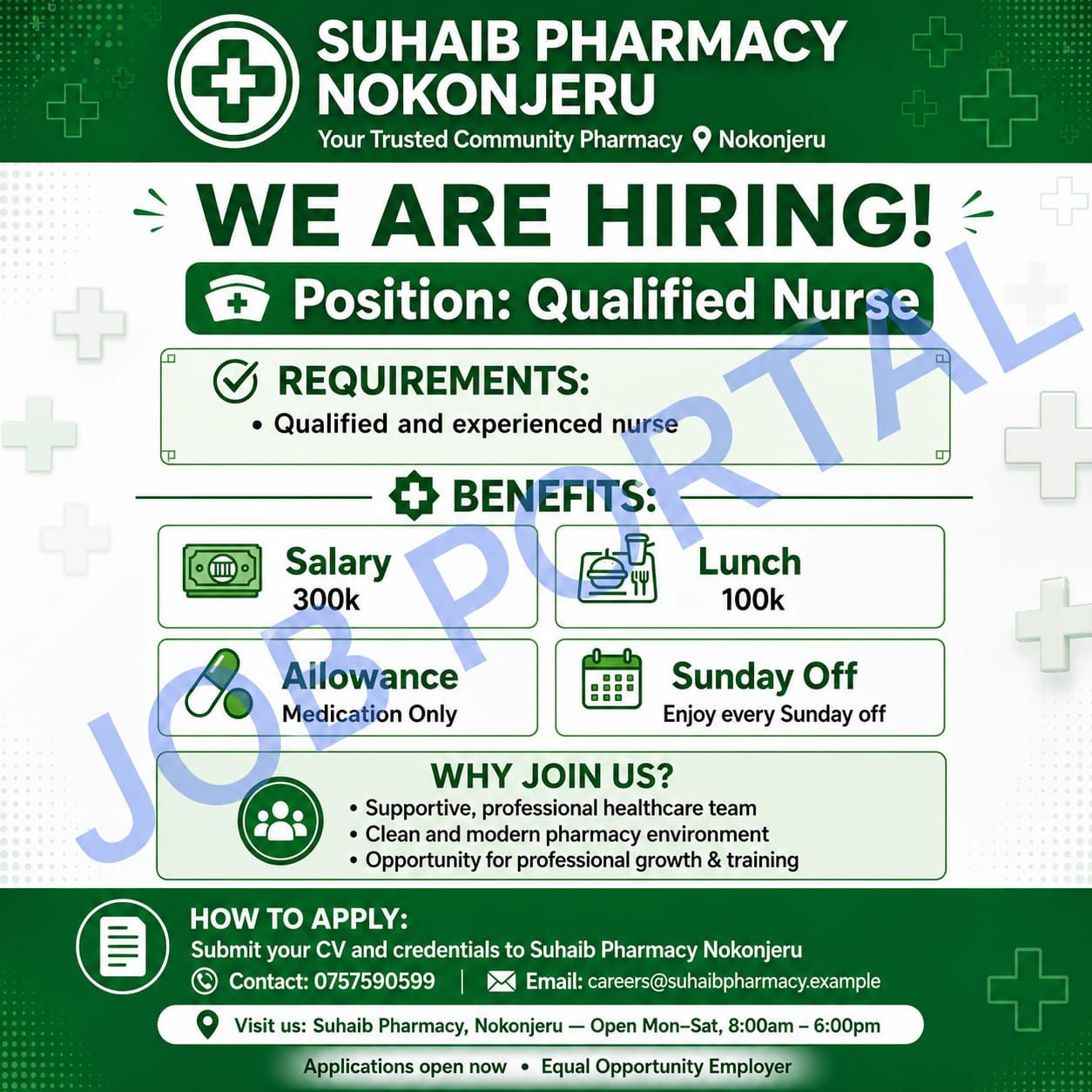
Qualified Nurse
Suhaib Pharmacy
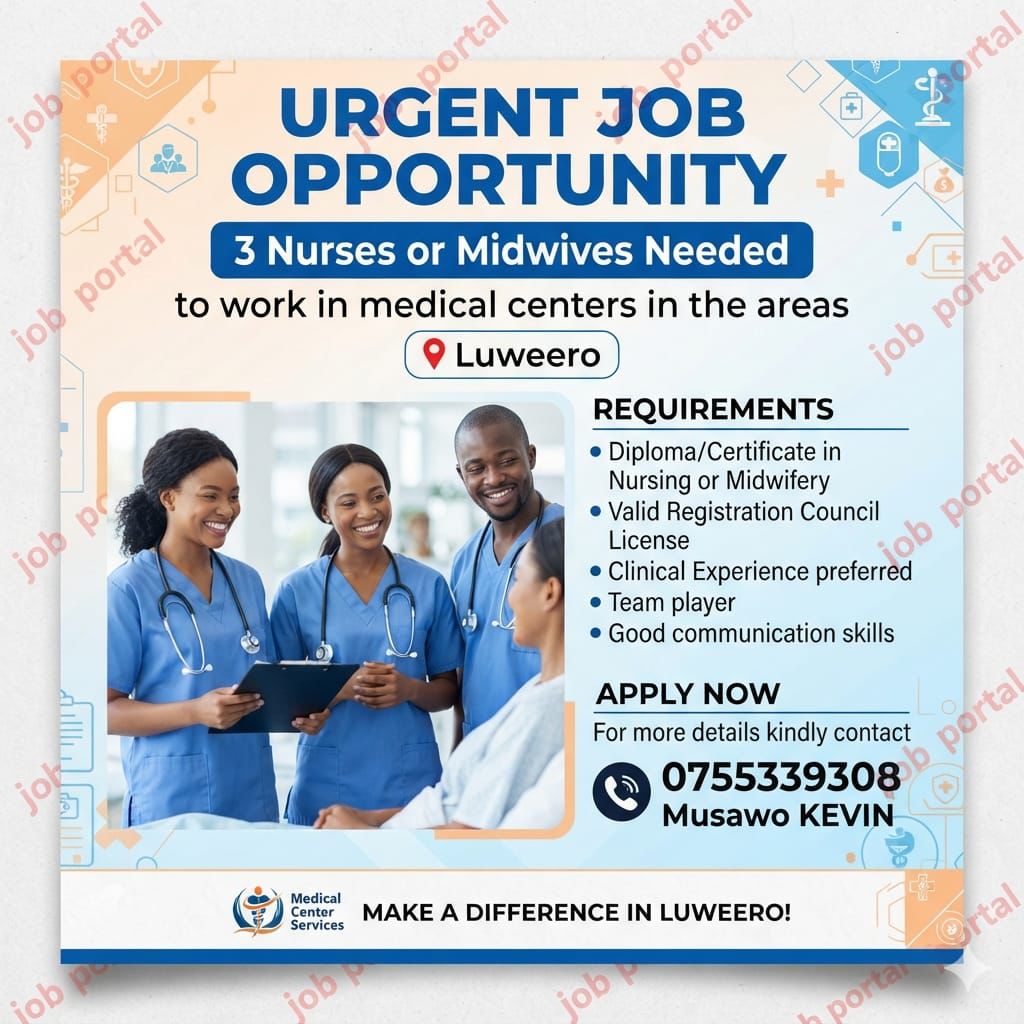
Nurses or Midwives Needed in Luweero
Musawo Kevin Medical Center Services
Nursing Officers and Clinical Officers
Aspin Drug Stores
This listing is provided for information only. Rate My Musawo does not guarantee its accuracy and is not involved in the recruitment or application process.